Grants, awards, openings, and moments from the Zadegan Lab.
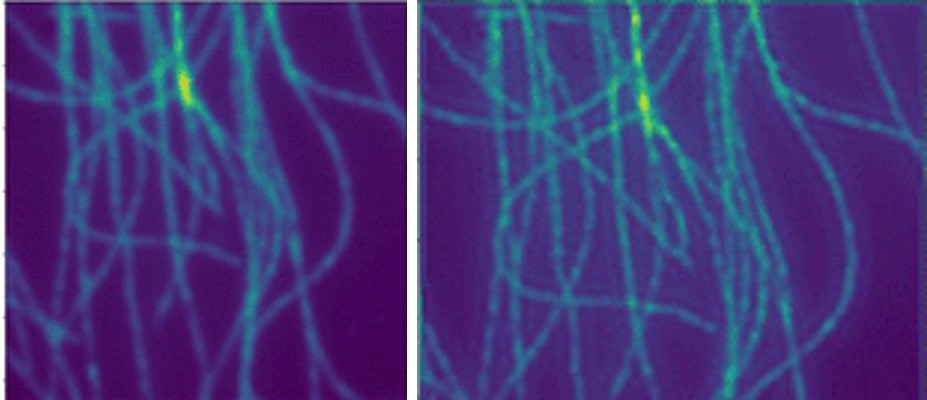
Huge congratulations to Mike Reed, who successfully defended his Ph.D. dissertation this summer (2026). Mike's dissertation spanned machine-learning-guided DNA fluorescence prediction, super-resolution microscopy, and explainable AI for single-stranded DNA — a decade-defining contribution to the lab's molecular information program. On to the next chapter!
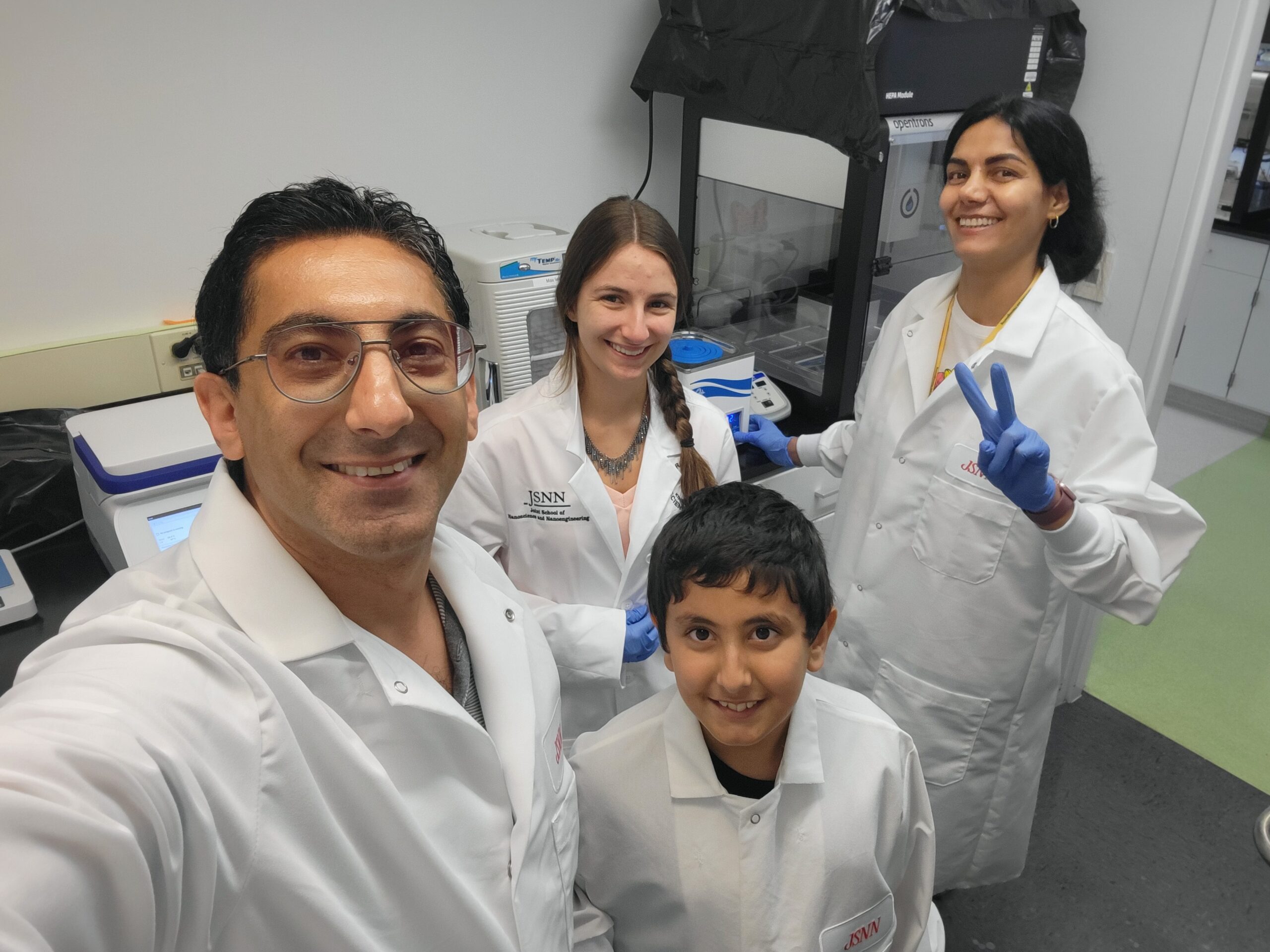
A record cycle for the lab: M. Nasiri and M. Bahadorani defended their dissertations in Fall 2025, and M. Reed completed the trilogy with his Summer 2026 defense. Three Ph.D. candidates through the finish line — congratulations to all three and their committees!
Twelve undergraduate and high-school students conducted hands-on research in the Z-Lab during the summer of 2023, each mentored one-on-one by the lab's Ph.D. students — J. Guerrero, H. Zhang, M. Karimoddini, K. Dixon, M. Ebrahimian, and G. Ruschman among them. The cohort embodies the lab's mission of embedding early-stage trainees directly into its molecular engineering workflows.
M. Nasiri led a hands-on synthetic biology workshop for K-12 students during summer 2023, walking the next generation of scientists through molecular-biology techniques in the lab. The workshop extends the Z-Lab's STEM-pipeline mission from undergraduates down to K-12 classrooms.
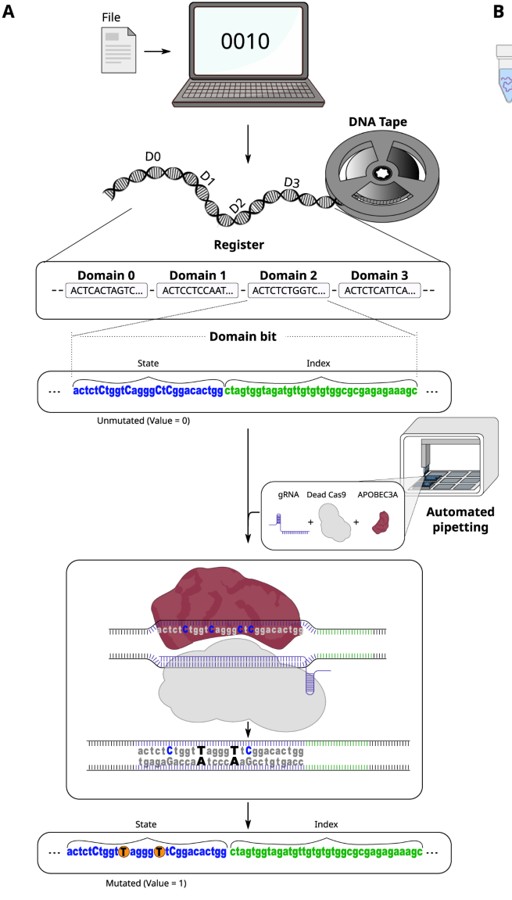
A. Sadremomtaz, R.F. Glass, J.E. Guerrero, D.R. LaJeunesse, E.A. Joseph, R. Zadegan, et al. published "Digital data storage on DNA tape using CRISPR base editors" in Nature Communications (2023, 14, 6472) — writing digital data onto native DNA tape via CRISPR base editors, without de novo oligo synthesis. A major step toward sustainable DNA data storage.

R. Zadegan and J.E. Guerrero filed a US patent application (19/189,507, 2025) on a molecular file system: file-system semantics — directories, read/write, random access — implemented over DNA storage media, bridging computer science abstractions and nucleic acid memory.
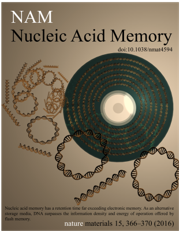
M.H. Raza, S. Desai, S. Aravamudhan, R. Zadegan — "An outlook on the current challenges and opportunities in DNA data storage" — Biotechnology Advances (2023, 66, 108155). The review maps the state of the art across encoding, synthesis, sequencing, and random access, and charts the road toward scalable nucleic acid memory.
Most medical diagnostic and therapeutic procedures depend on invasive methods and sophisticated tools — inconvenient for patients, expensive, and time-consuming. Our long-term goal is to develop intelligent molecular robots that detect diseases and treat them with timely, inexpensive, and convenient responses. The project (1R16GM145671-01) will construct a prototype of the envisioned robot: a programmable DNA-based robot that (i) detects specific RNA molecules and (ii) generates amplified signals and select gene products.
Our team collaborated with other faculty on the education ESTEEMED program led by Dr. Kanipes. The program's overarching goal is to significantly increase the preparation and production of high-achieving underrepresented minority students who will pursue Ph.D. programs in bioengineering or STEM fields — combining a Summer Bridge Program, intrusive advising, academic support, faculty-directed research, and summer research experiences.
SBMI lab members met over Zoom. Sanjaya Ghimire introduced applications recommended for collaborative Electronic Lab Notes and presented a review of "DNA punch cards for storing data on native DNA sequences via enzymatic nicking" at the Greensboro Synthetic Biology / Advanced Materials journal club.
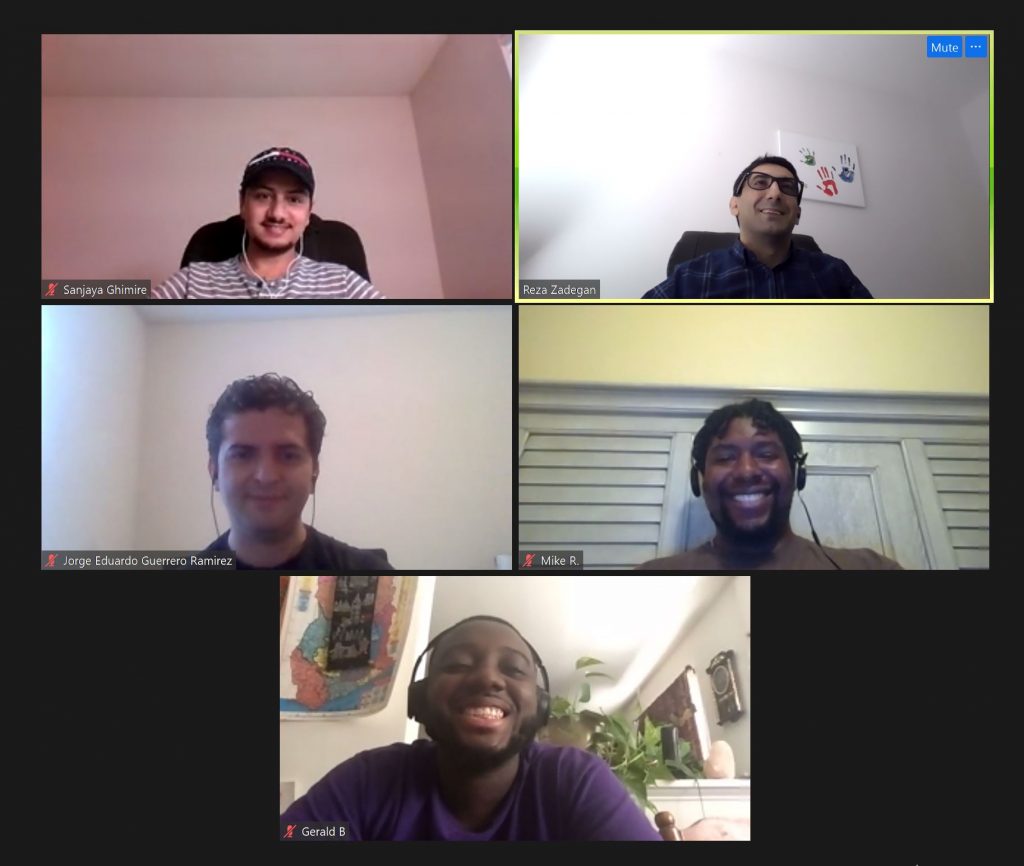
The lab gathered online to welcome new team members to the Z-Lab.
Dr. Zadegan received a Flash Grant from the North Carolina Biotechnology Center to perform foundational and computational work toward inexpensive, fast molecular robots that can detect viral threats at remote sites or places without access to laboratory equipment.
Programming via DNA. Skills Needed: coding, CRISPR technology, microfluidics, molecular & synthetic biology, good communication. Email your CV and a reference letter to Dr. Zadegan with the subject "Application to join Z-Lab".
SBMI lab received a $1.5M NSF SemiSynBio-II award to create a sustainable, scalable DNA-based digital data storage system. DNA Mutational Overwriting Storage (DMOS) overwrites the sequence content of template DNA domains (bits) to write data — no de novo DNA synthesis, no hazardous waste — functioning at the intersection of computers, synthetic biology, and semiconductors. NSF award #2027738.