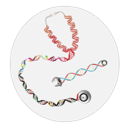
Our research — focused on synthesis and characterization of nucleic-acid-based materials — is applicable in personalized medicine, memory, nanoengineering, and bioengineering.
Gene expression is a process that we call "parsing of life algorithm," in which information flows from a one-dimensional DNA code into a three-dimensional structural base-21 protein.
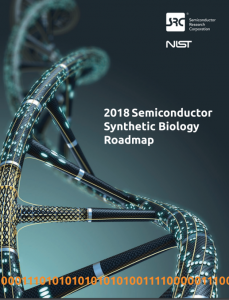
Our aim is to understand the biophysics of gene-expression mechanisms and design synthetic chromosomes. Moreover, our lab is involved in developing the SemiSynBio Roadmap that will drive research and development on national and global scales at the intersection of synthetic biology and semiconductor technology.
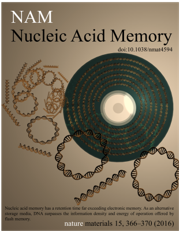
With the ever-increasing volume of digital information, it is estimated that global memory demand will exceed the projected silicon supply by 2040.
With information retention times that range from thousands to millions of years, volumetric density 10³ times greater than flash memory and energy of operation 10⁸ times less, Nucleic Acid Memory (NAM) is a potential alternative to silicon-based memory. Our aim is to investigate the possibility of utilizing NAM technology for future memory needs.
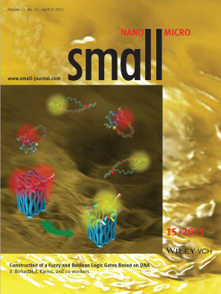
DNA addresses many of the current barriers to the self-assembly of small molecules into highly ordered nanostructures.
As a method for rational and arbitrary design of addressable, atomically precise, sophisticated and complex 2D and 3D nanostructures, DNA nanotechnology exists at the interface of synthetic biology, biotechnology, chemistry, computer and materials sciences. Our aim is to produce DNA nanostructures that serve as molecular guides for manipulation of biological processes, drug delivery, and molecular computation.

The interdisciplinary field of bioinformatics provides tools to analyze biological "big data." Bioinformatics is deployed to analyze biological information processes including information generation, storage, access, and interpretation.
Also, computer-aided design and modeling of properties of matter plays an important role in the study of materials. Our aim is to analyze the data and model materials properties.

DNA encodes life by storing, organizing, and regulating genetic information to build and maintain vital ecosystems. Our goal is to engineer the CAGE into a modular and programmable diagnostic system that — for therapeutic means — regulates gene expression by tuning RNA polymerase activity.

Supported by NIH (1R16GM145671-01), we are building a programmable DNA-based robot that detects specific RNA molecules and generates amplified signals and select gene products — toward inexpensive, convenient diagnostics.

DMOS overwrites the sequence content (state) of template DNA domains (bits) to write data — no de novo synthesis required — providing an environmentally sustainable route to DNA-based digital storage (NSF SemiSynBio-II).